The Mystery of the Golden Egg
An Alchemical Reading of George Sluizer’s The Vanishing (1988)
The white woman, if she be married to the red man,
presently they embrace, and embracing are coupled.
By themselves they are dissolved and by themselves they are brought together,
that they which were two, may be made as it were one body.
⁓
Son, by the faith of the glorious God, complexion is of Complexion, between two lights, male and female, and then they embrace themselves and couple together, and a perfect light is begotten between them, which there is no light like through the whole world.
- Rosarium Philosophorum, 1550
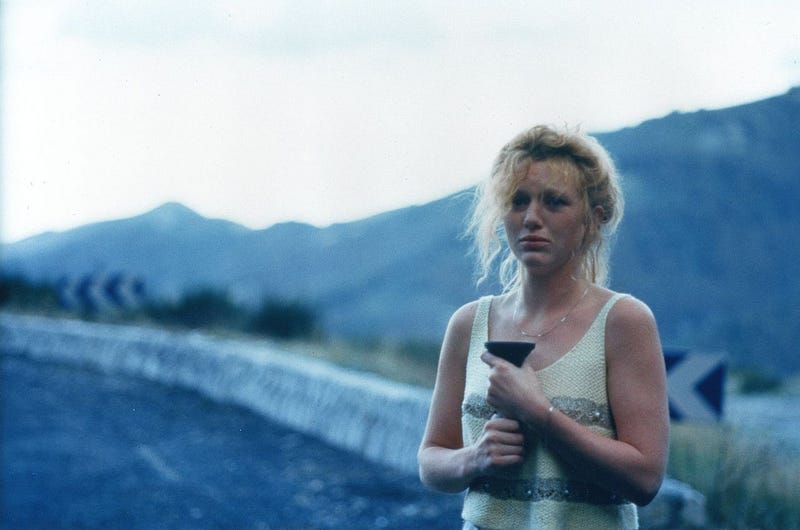
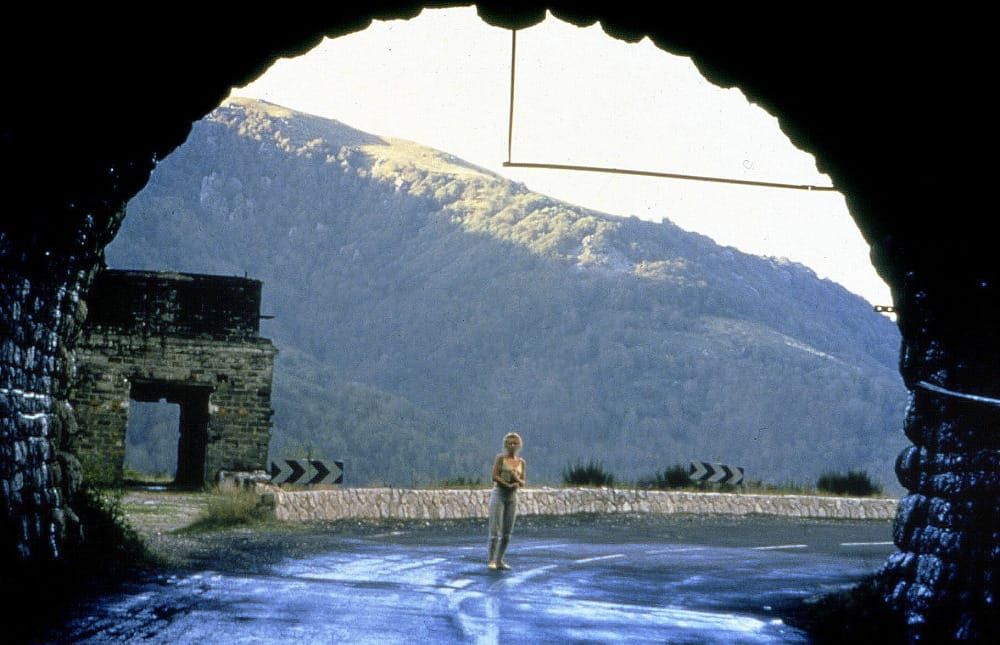
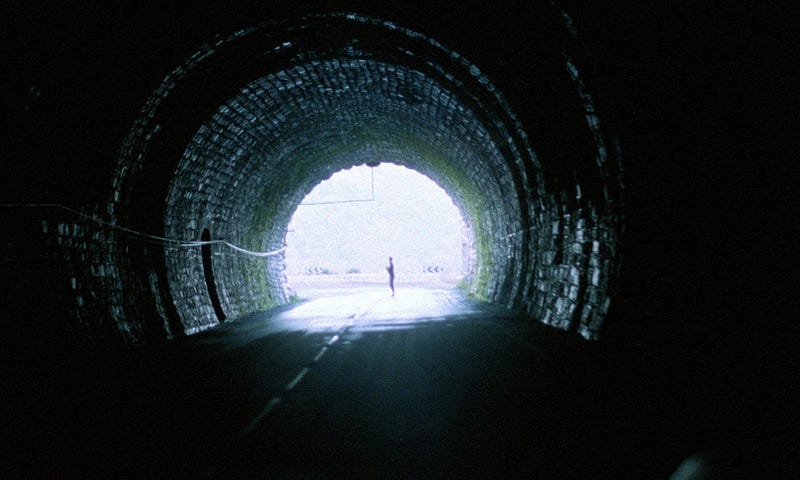
In 1988 George Sluizer shook the world of European cinema with his “unforgettably chilling psychodrama” — Spoorloos (The Vanishing). In Europe, receive immediate critical acclaim and won numerous awards. Sluizer’s masterful direction was praised by both critics and other film makers. Kubrick himself declared the film to be much more frightening than The Shining, and even got in touch with Sluizer to discuss editing. Naturally, when dealing with a mystery/thriller such as Spoorloos, comparisons to Hitchcock are inevitable. It was recognized by some to be the “ultimate tribute” to the master of suspense. Specific attention was drawn to the final denouement, which manages to dwarf even some of Hitchcock’s most memorable endings. The film tells the story of a young and adoring Dutch couple, Saskia Wagter (Johanna ter Steege2) and Rex Hofman3 (Gene Bervoets) who are on their way to a biking vacation in Bois Veaux,4 (an incredibly fitting name for the somewhat archaic allusions the film makes) France. As they enter a tunnel, Saskia opens up about a recurring ominous dream she has been having in which she’s drifting through space in a golden egg. However, in her most recent dream a second egg containing another person appeared. The eventual and inevitable collision of the two is something that causes Saskia to be somewhat anxious and morbid, as she feels that it signifies the end of something, and that it might soon become a reality. In the tunnel, car runs out of gas, resulting in a heated and tense argument between them, and Rex leaves her alone in the car. It is here, in the engulfing darkness, that her sense of the end being nigh peaks.
The viewer also feels that this might be the moment in which “the vanishing” itself happens, which contributes to the overall tone of helplessness and despair. However, as it turns out, both the viewer and Saskia are wrong and the couple makes it to a bright and populated rest area, where Saskia mysteriously disappears while buying refreshments. In a brilliantly edited sequence, accompanied by ghastly evocative music, the jolly and summery atmosphere at the gas station suddenly becomes unsettling and chilling. In broad daylight, her inexplicable vanishing leaves both Rex and the viewer completely in the dark. Fast forward three years, and Rex has started a new relationship, but he is still obsessively longing to find out what happened to Saskia, and is having the same dream about the golden egg. His longing for answers leads him to a downward spiral of obsession, which culminates when the kidnapper, Raymond Lemorne (Bernard-Pierre Donnadieu), contacts him, and the two eventually meet. However, despite Rex and Saskia clearly being the one suffering throughout the story, the film does not focus the bulk of its attention on them. In fact, she is in the film for about a total of 11 minutes. Instead, what Sluizer does is provide the viewer with a window into the workings of an incredibly methodical sociopath, whose identity is revealed early in the film. Raymond is an ordinary high school chemistry teacher, and a loving husband and father — someone rather unremarkable and almost invisible at times. Upon meeting Rex, he offers him the opportunity to find out exactly what happened to Saskia, under the condition that he has to undergo the exact same experience. Reluctant at first, Rex hesitates, but the image of an arduous life filled with dreadful uncertainty pushes him over the edge, and he accepts Raymond’s offer. In what is perhaps one of the most memorable reveals and endings in cinema, Rex is shown buried alive, just like Saskia was, in the property of Raymond’s family villa. The film concludes with a closing shot of a newspaper headline about the vanishing of Saskia and Rex. The egg-shaped image of each contrasted against the unbearable darkness.
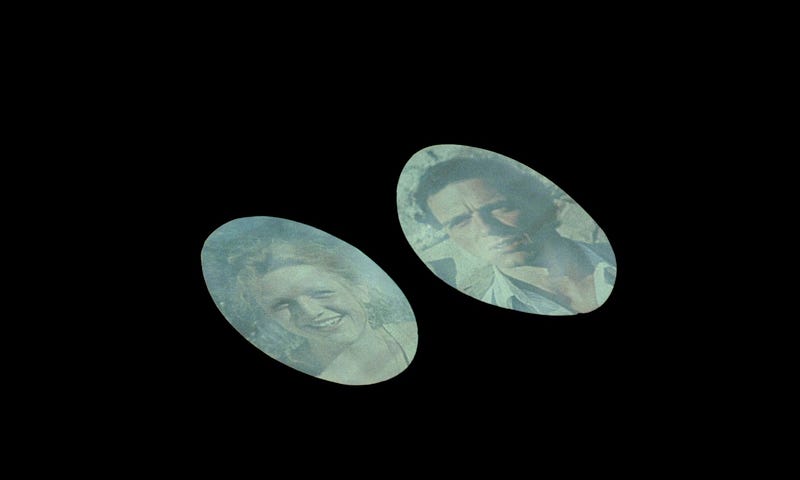
Spoorloos is an intensely visual experience, so I do apologize for possibly not being able to do it justice in writing. Everything about the film — from the camera work, score, use of colors, and lighting, to the acting and editing — contributes to a memorable and outstanding film that lingers after the credits roll out. It is certainly stands out from others in the mystery/thriller genre, and is undoubtedly Sluizer’s Magnum Opus. My usage of “Magnum Opus” here instead of, say, “masterpiece” is quite deliberate. As it is probably evident from my love for the film, I have indeed seen it multiple times and read up on it extensively. However, even after many viewings it felt like Spoorloos was still hiding something from me. Something much greater, which maybe I was not yet ready for. Despite supposedly providing all the necessary answers to questions about its characters and plot, it felt like Spoorloos, unlike other films within the genre, was asking me questions I did not have the answers for. After each viewing, I felt like the film asked me to revisit it once I had more to bring to the table. It was not until years later, when I started learning more about alchemy, its history and philosophy, that my mind suddenly felt drawn to tackle the Mystery of the Golden Egg once more. It almost felt like some external force was directing my mind to passively think about the film. So I did, and by the end of the film, I felt as if all the praise that the film has received was still insufficient to describe just how masterfully crafted it is. The idea of looking at Spoorloos not only as a Magnum Opus in the modern meaning (an artist’s great work), but in the alchemical sense was what drew me to have a different set of questions prepared for the next time I watched the film. I would not claim to have all the answers to the riddle of the golden egg now, but what I hope to do is offer a different reading from a slightly new perspective, which may seem unorthodox upon first glance. When I revisit Spoorloos now, I mostly view it as a story about alchemy wrapped in a thriller/mystery package, rather than the other way around. The elements of both are definitely there, and certainly the film could exist on its own as a genre film if all the symbology and allusions to alchemy were removed. However, without them Spoorloos would lose most of what drives the film’s eerie atmosphere, and the effect that the characters — especially Raymond Lemorne — have on the viewer.
The alchemical Magnum Opus is a term very closely associated with the creation of the Philosopher’s Stone. The idea was to bring something to perfection, by growing or developing it from a primitive or base form. The classic and most famous example would be the transmutation of base metals, like mercury, to gold. Essentially, alchemy’s goal was the creation of higher things via the transformation of lower, inferior things. It was believed that in order to be perfected each substance or element had to be reduced to its most primal state (or materia prima). This took place in the center of the alchemist’s oven/vessel, often symbolically refereed to as the Philosopher’s Egg, or the Philosophic Egg, in which they aimed to replicate what happens at the bowels of the Earth, but at a greater speed, essentially mimicking God’s work. Only after placing it in such an embryonic form — regressus ad uterum (returning to the womb) — in order to rid it of its impurities, could the substance then be transmuted and transformed into the sought after perfect paradisaical gold. Because the laboratory arose as the place to imitate nature, most of the experiments were carried out in the center of a laboratory vessel — analogous to the processes occurring in the center of the Earth, i.e. in medio centri. Symbolically speaking though, vials can be seen as the Earth’s core and vice-versa. The importance of the vessel cannot be overstated. It was no coincidence that such great emphasis was placed on its shape. One usually thinks of a test tube or a flask, but due to the symbolic nature of alchemy itself, the vessel assumed a mystical role, thus becoming a significant symbol, central to many of the alchemical processes. It must be round, preferably egg-shaped, in order to properly replicate the idea of the spherical cosmos associated with creation — almost reminiscent of a uterus from which the miraculous Philosopher’s Stone is born.
In the case of Spoorloos, the two principal ingredients — mercury and sulfur (Saskia and Rex) are literally placed within the (al)chemist’s vial (the bowels of the Earth), where they undergo a physical transformation, turning them to gold. Gold was considered God’s element. One that could not corrode or become corrupted, in a way, the material, physical representation of God’s qualities. Metals were seen as the most perfect manifestation of basic mater. Aristotle mentions it in book III of “Meteorology”, remarking that the formation of metals comes from two substances. The first one being a watery vapour — most probably mercury — and the second one an earthly smoke — probably sulfur. The idea was that all things are eventually grown to perfection. They mature, and ripen into gold. Akin to what happens in nature. Alchemists looked for something to catalyze this natural process. Meaning, if mercury and sulfur were in a perfectly pure state, free of their impurities, then the end product would be the most perfect metal — gold. Moreover, the Philosopher’s Stone was also believed to have had an effect on the body and the soul. At its core, the idea behind it connects the material and the organic with the spiritual and immaterial. One could argue that the goal was to elevate one to perfection, bringing one closer to God. This was thought to be the ultimate secret, so they resorted to alienating their texts and works as much as possible. The idea was that such secret and powerful knowledge should be kept out of the hands of the vulgar (the unadept, the common people). The language used was generally very cryptic, secretive, symbolic, and coded. A famous example of such language can be seen in the German physician and alchemist Heinrich Khunrath’s texts on alchemy:
“Darkness will appear on the face of the Abyss; Night, Saturn and the Antimony of the Sages will appear; blackness, and the raven’s head of the alchemists, and all the colours of the world, will appear at the hour of conjunction; the rainbow also, and the peacock’s tail. Finally, after the matter has passed from ashen-coloured to white and yellow, you will see the Philosopher’s Stone”.
- Heinrich Khunrath (c. 1560–9 September 1605)
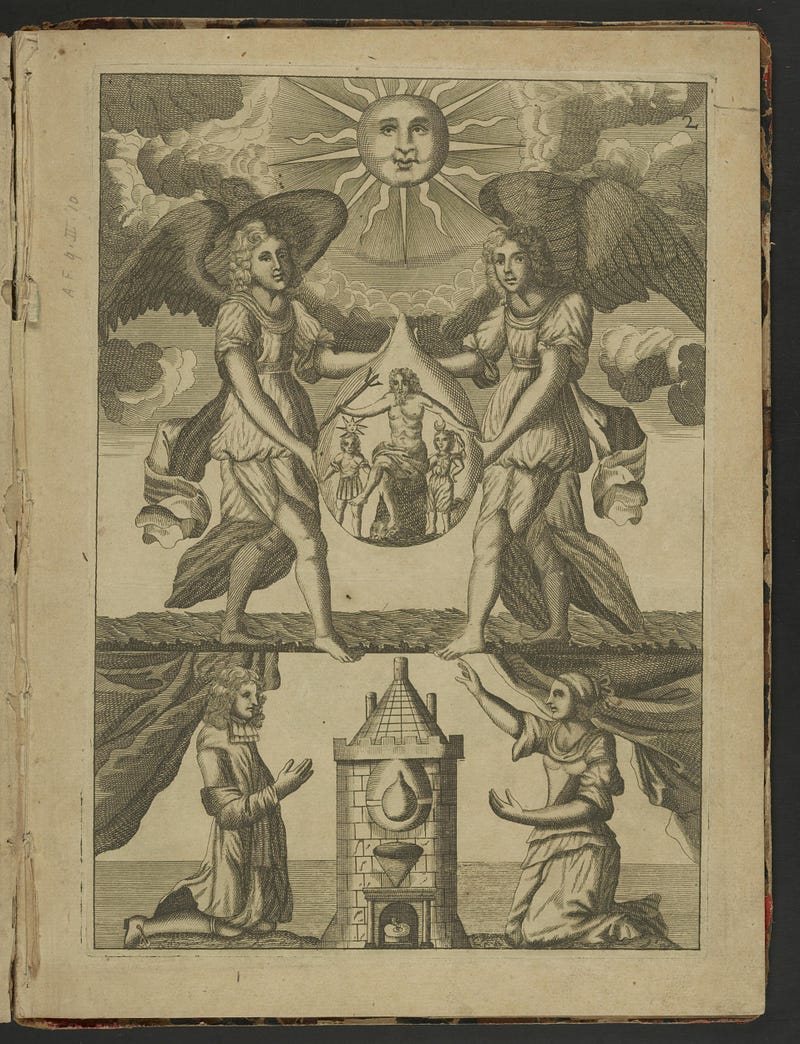
So then, this quest for the Magnum Opus, is what I had in mind when I revisited Spoorloos last. An obsessive quest for the Great Work, whose aim is to elevate something to divine perfection by transmuting it to gold in the alchemical vessel, coded behind the language of the mystery/thriller genre and cinema. To my greatest satisfaction, that’s what I found. From its very beginning Spoorloos makes us aware that it’s a film that will be reliant on symbology and metaphors, which is of course not uncommon for films in general. If we are to go down the path of alchemy and the nature of the old alchemical texts, we have to accept that the film will explicitly use subverted language and hidden symbology to convey its real meaning. Thus, what is ordinary and seemingly a throwaway reference, or just mere oddity, shouldn’t be lightly dismissed. On the contrary, such elements and choices should be viewed as deliberately interwoven into the film’s fabric. Some of these symbols might appear almost archaic or arcane to contemporary viewers, but the spiritual symbolism is still there. In that sense, by being imbued with scattered symbols through its entirety, Spoorloos mimics how older alchemical texts used to conceal their true meaning behind incredibly allegorical illustrations or incomprehensibly cryptic language. In fact, to further draw this analogy between Spoorloos and old alchemical texts, Lemorne recounts a childhood memory in which he is seen reading the Mutus Liber — a seventeenth-century book of illustrated plates dedicated to alchemy. It shows the young boy flipping through its pages, enchanted by what is shown to him. The fifteen plates in the Mutus Liber show how one can achieve the Magnum Opus and obtain the Philosopher’s Stone. Explicit focus is put on the second plate where one can clearly see a man and a woman inside a round vessel (Philosophical Egg)
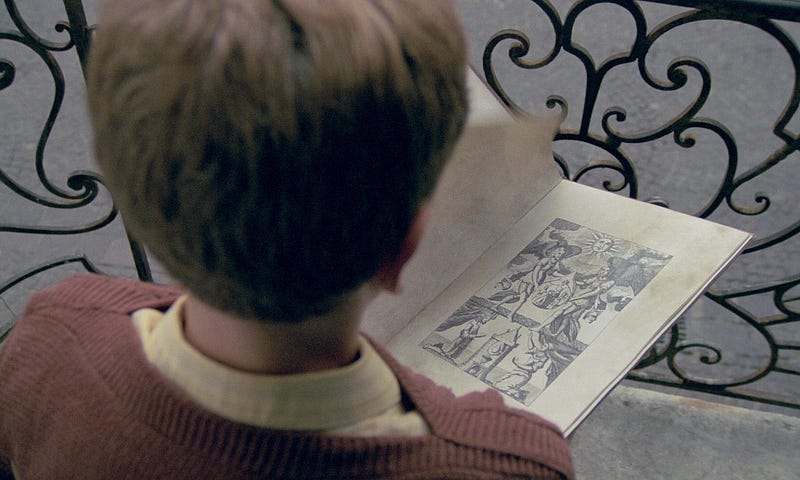
Having gone through the book, young Raymond stands on his balcony in a Christ-like position — a stance observed numerous times throughout the film — and decides to jump off. If we follow the notion that Raymond has access to old and arcane knowledge and essentially has the “formula” for the Magnum Opus, and we accept the idea that he is indeed an alchemist working towards its attainment, then any way of viewing the film other than as an old and arcane alchemical text modified to the medium of cinema, will be inadequate and will do a great injustice to the direct references to alchemy that are undeniably present in the film.
Having said all that, the decision to make Raymond the primary focalizer5 of Spoorloos’ story is much more than a mere stylistic choice in order to differentiate the film from the conventions of mysteries and thrillers. His main occupation as high-school chemistry teacher is a detail not at all incidental. Despite the fact that in the modern world alchemists are thought to have been charlatans and crazy “crackpot scientists” obsessed with making gold, two of the most prolific modern scientists, Isaac Newton and Robert Boyle, were both heavily influenced by alchemy. And the latter of who is considered by many to be the father of chemistry as we know it today. Thus, the connection between alchemy and chemistry cannot be ignored, regardless of whether one believes chemistry to be a direct continuation of alchemy or not. Perhaps the most prominent and recurring symbol in Spoorloos is the golden egg or just oval-shaped things in general — mostly emphasized by Saskia’s dream of the golden egg, the bicycles on top of the car, the yellow frisbee, the tunnel. It happens to be one of the most commonly used symbols in alchemy as well. Usually such circulatory iconography is seen as a way to depict alchemical vessels/the Philosophic Egg. The ambivalence of Saskia’s dream only increases the menacing sense it carries, and one cannot help but feel as if it’s a somnia a Deo missa (a dream sent by God). As they enter the tunnel, it feels like we’re stepping into Saskia’s inner world. One that is full of fear, her faith is predetermined and in the hands of God.
In fact, Spoorloos foreshadows Saskia’s fate by showing us many images alluding to her death — more specifically death as a way of transcendence. She’s seen at the end of the tunnel inside a metaphorical, glowing egg, and on numerous occasions she’s shown looking towards the sky, or being in a purposely overexposed frame indicating her movement towards the light.

Despite her funny, outgoing, and incredibly charming character, her subconscious appears dark and full of anxiety. According to C.G. Jung, the self itself is a “union of opposites” par excellence. Absolutely paradoxical and capable of representing thesis and antithesis simultaneously. We see this being heavily alluded to with the tunnel scene, where the film sets up the primary dichotomies and opposites, and unites them. Reality versus dream, light versus darkness, life versus death, male versus female. It is no coincidence that Rex and Saskia have a heated argument while they’re in the tunnel. The contrast between both of their characters is astoundingly evident here. Saskia’s passivity, and timidness, against Rex’s fiery, volatile outbursts. In alchemy, the “unity of opposites” or coincidentia oppositorum, is a mode of thought part of a dialect philosophy, which is most deeply concerned with the creation or existence of something out of at least two opposite, yet dependent conditions.

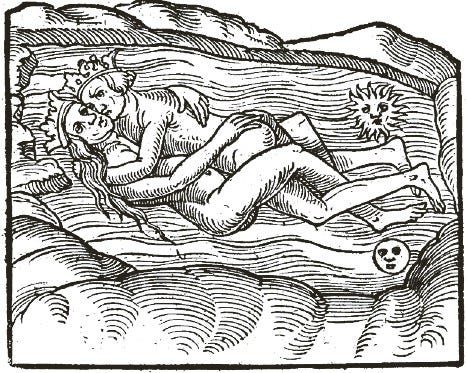
Examples of that would be masculine and feminine; anima and animus; body and soul; mercury and sulfur; etc. The perfect unity of these contrasting pairs was often believed to result in the alchemical Magnum Opus — the Philosopher’s Stone. The allegory of the marriage between the Red King and the White Queen is an example of one of the most notable unities of opposites in alchemy (fig. 2). The King being sulfur with its combustibility, represented by his masculine, active and blazing persona, while the Queen is associated with mercury and its fusibility, represented by her fluidity, and passivity (fig. 3). Taking the nature of their characters, and the symbology which alchemy uses for mercury and sulfur, it doesn’t seem like too much of a stretch to equate each of these two elements to Saskia and Rex respectively — the two principal ingredients of Raymond Lemorne’s Magnum Opus.
With all that in mind it would seem almost ignorant to ignore the signs pointing to Raymond being the grand alchemist in Spoorloos. He’s the alchemical godhead, the chemist with the book, the possessor of the hidden knowledge that is concealed even from the viewer. As such, he shows that he’s capable of turning an egg into gold regardless of whether killing is part of the alchemical transmutation.
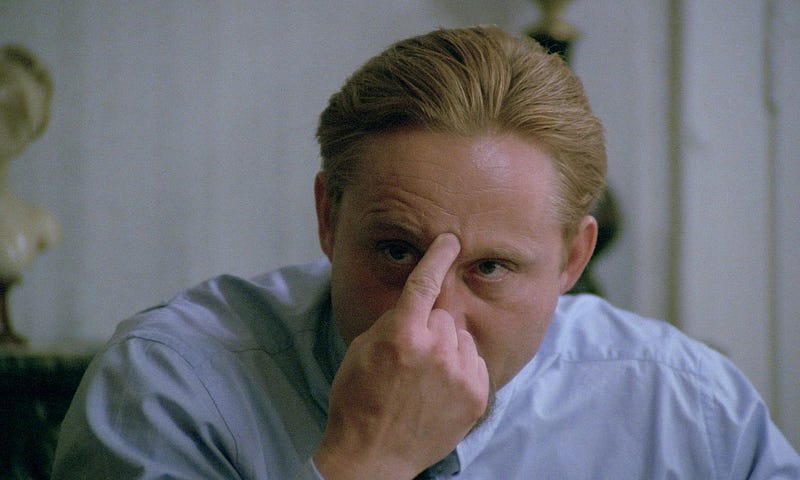
Lemorne’s obsession with his Great Work is illustrated in the conversation he has wife who thinks he’s having an affair because of the added mileage to the car, and time he spends at an isolated house that he’s purchased at St. Côme6 (fig. 4). His response to this perfectly encapsulates the pursuit and obsession over something Great, and echoes the alchemists’ philosophy.
“The house at St. Côme is like a passion. Because it’s perfect, it has become a passion. You start with an idea in your head. And you take a step, then a second. Soon, you realize you’re up to your neck in something intense… but that doesn’t matter. You keep at it for the sheer pleasure of it. For the pure satisfaction it might bring you.”
- Raymond Lemorne to his wife — ‘Spoorloos’ (1988)
Disguised as a renovation project, the house is the place where he physically prepares himself for his Magnum Opus. It’s an old house that seems like a throwback to earlier times, somewhat reminiscent of a laboratory with all its different flasks and antique containers. We see Lemorne practice various scripts in order to lure a woman into his car, he’s adamant about the precision of his movements, and even drugs himself with chloroform to time how long he’ll be out. Here we see his incredibly methodical and perfectionist nature. He even makes attempts at developing a basic level of English in order to aid him in his quest. One of the most unnerving and memorable scenes is when Lemorne picks up his daughter from school and opens the car door for her, walks behind the car, opens the front door with his right hand, as if he’s holding a chloroform soaked rag in the other, reaches out behind her to lock the passenger’s door, and then “playfully” locks her neck with his right arm, following the exact pattern he’s practiced for kidnapping. What this creepy sequence demonstrates is that for Raymond there really is no mask of pretense as with most sociopaths. He’s not shown as being overly tender and sweet with his family, and ruthlessly violent with his victims. His distant and cold, but balanced demeanor is persistent, but at the same time he is also caring. His character is another great example of the “unity of opposites” concept, examples of which we see throughout the whole film. Lemorne is both cruel and loving. Unlike other antagonists in the genre, Raymond’s Great Work is mixed with his normal family life. This indicates that he’s a man whose life is in perfect unison and total balance. However, most of the preparation turn out to be futile, as the numerous times he initially attempts to kidnap a woman he actually fails at it. Lemorne even fails at this on the day that they’re all at the rest area. In fact, the first time we see him and Saskia engage in a conversation he seems to have given up on the idea of doing it then — he has taken off the false cask from his hand, and is simply enjoying a cup of coffee. It almost feels like the whole thing was birthed into fruition by pure chance or faith.
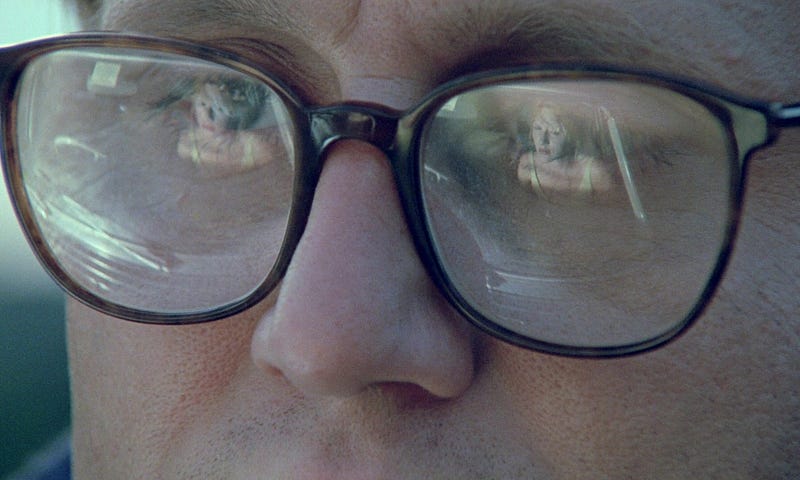
However, upon closer scrutiny, we see that there’s an astounding amount of events that had to occur in a specific sequence in order for the perfect conditions for Lemorne’s Magnum Opus to be achieved. In the initial 15 minutes of Spoorloos, we see the two lovers make several decisions, which (maybe not so) indirectly result in the consequential disappearance of Saskia. She actually suggests getting off the highway in order to see some of the “local color”; they pass a gas station before entering the tunnel, and Rex dismisses Saskia’s concerns about the volume of gas they have; Saskia decides to bury a couple of coins (their change) next to a tree in a superstitious sign of their love. Doing the opposite of any of those would potentially set up a butterfly effect causing Saskia and Lemorne to either never be at the same place, or never have to interact. Despite the perceived randomness of the situation, Saskia’s kidnapping almost feels orchestrated by an omnipotent entity, because of how perfectly “the stars had to align” for it occur. This, combined with the numerous times Raymond is depicted in a crucifix position, alludes to higher powers being at play. At the gas station, Saskia decides to go back and buy them refreshments. Unfortunately, she’s out of change, so buying a coffee is suddenly not an option; She asks for some from the other person at the coffee machine, who just happens to be Lemorne. They have a brief exchange, but Saskia eventually goes to the cashier and gets some coins. However, once she’s got the drinks from the vending machine, she starts a new conversation with him. That’s something that might appear as unusual but it does seem fitting for Saskia’s outgoing personality, and her constant desire to practice her French. She notices Raymond’s key chain which bears the letter “R” and asks him whether she could buy it off of him for her boyfriend Rex. Lemorne takes advantage of the situation and says that he’s a salesman and has plenty of them in his car. She follows him there and decides to enter the car after seeing a photograph of his family on the car’s dashboard. Next thing she knows she’s chloroformed and buried alive. What this whole sequence of events demonstrates though, is the reliance on a slightly different vision of the “unity of opposites” concept in order to not only help advance the film’s plot, but Lemorne’s Magnum Opus as well. All the elements are there beforehand and explicit attention is paid to them in various scenes before the one at the rest area. For instance, the coins that Saskia and Rex bury right before her demise. It’s a scene meant to symbolically represent their endearing love for each other, and it’s contrasted with the following scene, leading to her death. Thus, the coins, established as symbol of love, become a device employed to lead to her death. In turn, the scene in which Raymond is given gifts by his family — tiles for the house at St. Comte, a sweater, a key chain with his letter “R”, and an album of his life — is contrasted with the sequence where he’s at the rest area, looking for a victim. Once again, scenes of endearment, and love are contrasted with scenes which lead to pain and suffering. What really puts the final nail in the coffin both figuratively and literally for Saskia though, is the family photograph which Lemorne takes when he is enjoying a day out with his family. On that day he actually saves a little girl from drowning, further juxtaposing the final and biggest unity of opposites of all — that of life and death. All those gifts and the photograph play a part in completing his Magnum Opus. He wears the sweater on that day, the key chain that Saskia spots, the album is where he gets the inspiration from, the boxes of tiles through which he is pretending to go, looking for a fictitious key chain that is to be sold to Saskia, and finally the family photograph that prompts her to enter the car, thinking that he can be trusted. Symbols of love, affection, and the celebration of life become the very tools leading to death. However, even though Lemorne can be an especially cruel alchemical God-figure, we must remember that he’s also capable of showing love. As such, in killing them he transports them from the material realm to the transcendental plane, where they exist in an untouchable, incorruptible, and divinely pure marriage between King and Queen.
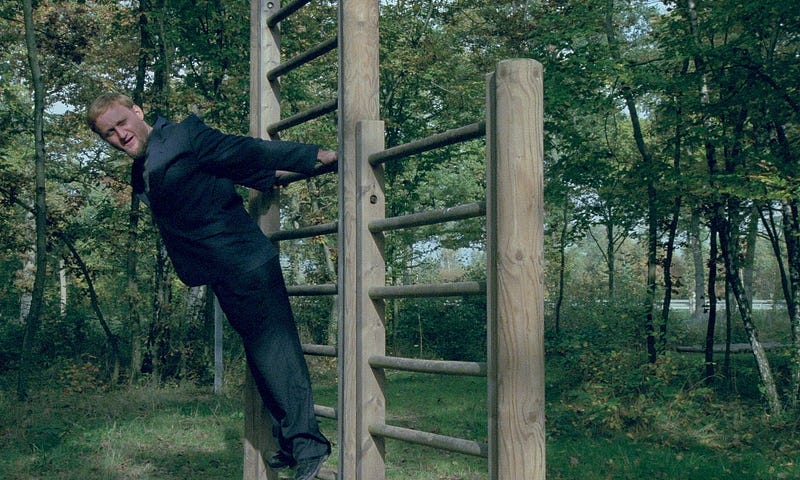
Despite the critical and popular acclaim of Spoorloos, the 1993 Hollywood remake, directed by George Sluizer as well, failed to impress the audiences there. Chiefly because the film was stripped off from all the alchemical, religious, and psychological subtexts, and was instead altered in a more traditional Hollywood fashion. Naturally, the ending was also different. In this one the killer (Jeff Bridges) is vanquished, and the protagonist (Kiefer Sutherland) and his new girlfriend (Sandra Bullock) live happily ever after. Without all the eerie atmosphere, and the esoteric and spiritual themes, the film becomes unremarkable and dull. What this shows us is that without those alchemical elements, the true and “real” ending of Spoorloos cannot exist. In the end, reading Spoorloos via an alchemical key allows us to unlock this almost alternate finale to the film, one that once more echoes the philosophy of unifying opposing qualities. As such, Spoorloos allows two endings to coexist simultaneously — a deeply tragic and horrifying one, and one of tranquility, serenity, and transcendental love. Thus, showing us not only the grand alchemist’s Great Work, but the real Magnum Opus as well — one capable of making us feel the unbearable burden of loneliness, knowing that there’s no light at the end of the tunnel, and one whose bright shining paradisaical gold comforts us warmly.
Sources:
Cavendish, Richard. The Black Arts / by Richard Cavendish. London: Routledge and Kegan Paul, 1967.
Derry, Charles, and John Russell Taylor. Dark Dreams 2.0 : a Psychological History of the Modern Horror Film from the 1950s to the 21st Century / Charles Derry ; Foreword by John Russell Taylor. Jefferson, North Carolina ; London: McFarland & Company, Inc., Publishers, 2009.
DeVun, Leah. Prophecy, Alchemy, and the End of Time: John of Rupescissa in the Late Middle Ages. New York: Columbia University Press, 2009.
Jung, C. G, and C. G Jung. Collected Works of C.G. Jung, Volume 12: Psychology and Alchemy. Princeton University Press, 2014.
Kauffman, George B. “The Role of Gold in Alchemy. Part I.” Gold Bulletin 18, no. 1 (1985): 31–44.
Pinkus, Karen. Alchemical Mercury [electronic Resource] : a Theory of Ambivalence / Karen Pinkus. Stanford, California: Stanford University Press, 2010.
VanČik, Hrvoj. “Opus Magnum: An Outline for the Philosophy of Chemistry.” Foundations of chemistry 1, no. 3 (1999): 239–254.